
Tiny Houses & the IRC: A Path to Clear, Safe Housing Options
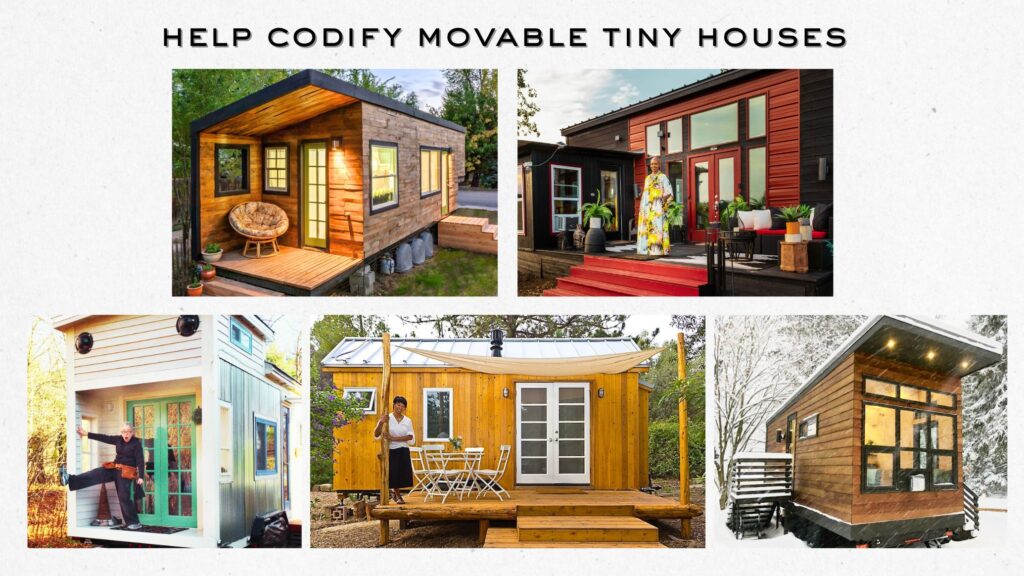
If you’ve ever wondered why tiny houses aren’t more widely available as permanent homes, the answer comes down to building codes. Over the past several years, a growing group of housing advocates has been working to change that. Here’s the story of our effort, why it matters, and how you can get involved.
TL;DR; if you can help, please do! This is the last chance to advance relocatable tiny houses in the IRC until 2030. You can help: [Sign the petition], [Join the mailing list], [Support the work].
The Problem: A Gap in the Code
Tiny houses on wheels, movable tiny homes, relocatable tiny houses – whatever you call them – are designed for long-term occupancy, with full living, sleeping, cooking, and sanitation facilities. Yet, they exist in a confusing gray when it comes to codes: they aren’t usually recreational vehicles (RVs), they aren’t manufactured homes, and model residential codes don’t explicitly recognize them as dwellings either.
As a result, local governments often struggle to regulate them. Some classify them as RVs, which limits where they can be placed—often on the outskirts of towns or in campgrounds/communities—effectively excluding them from urban neighborhoods where affordable housing is most needed. Others have no clear code guidance, and so either can’t, or they make up their own rules. This leaves builders and homeowners uncertain about safety standards, permits, and financing.
From Appendix Q to Appendix BB: Addressing the Gap
The conversation about tiny houses in the IRC began with Appendix Q in 2016, which addressed some aspects of small homes on foundations. I had the privilege of participating in that effort, helping clarify how these dwellings could safely fit within the existing code framework.
Appendix Q was an important first step, but it primarily addressed homes on foundations.Tiny houses built on chassis were left outside the model code entirely, creating a regulatory gap that greatly limited where and how these homes could be permitted.
To address this, we developed a new proposal to modify Appendix Q (which is now called Appendix BB), and submitted it through the International Code Council’s public comment process. This proposal:
- Recognizes relocatable tiny houses as dwellings under the IRC
- Establishes performance-based building standards to ensure the same level of safety as other dwellings
- Provides prescriptive language for important and unique aspects
- Preserves local zoning authority, so cities and towns decide where these homes are allowed
- Clarifies standards for builders, insurers, lenders, and homeowners
In short, the goal is to create a clear, safe, and durable pathway for communities that want to allow relocatable tiny houses to expand housing options while maintaining safety and local control.
Why This Matters
Building codes might sound technical, but they shape who can live where and what kinds of homes are possible. Updating the code for relocatable tiny houses helps:
- Expand housing options for people seeking affordable, small-scale homes.
- Reduce regulatory barriers that currently limit tiny houses to non-residential areas.
- Support incremental and flexible housing solutions for communities facing housing shortages.
How to Learn More and Get Involved
This process is public, and there are several ways to follow along, stay informed, or support the effort between now and April 22nd – when the code language will be voted on:
- Sign the petition: Show public support for clear, safety-based, accessible standards → [Change.org Petition Link]
- Stay updated: Join our mailing list for updates and support for outreach windows → [Email Sign-up Link]
- Support the work: Contributions help cover technical development, and travel expenses to participation in the public code process → [GoFundMe Link]
- Read more: [Relocatable Tiny House FAQs],[Technical FAQs]
- Code language: Comment #1 – Performance Language, Comment #2 – Prescriptive Language
- Contact me directly: Macy, mizacy@gmail.com
Looking Ahead
This is a heavy lift and will require a 2/3 majority vote from the voting body. By engaging now, we can help ensure that relocatable tiny houses have a recognized, safe, and accessible place in our housing landscape.
Our work isn’t about bypassing safety or zoning—it’s about clarity, transparency, and choice. Tiny houses are one of many tools communities can use to address housing challenges, and building code reform is the foundation for making that possible. Together we can help make safe, flexible housing a reality for more people.

1 Comment